§01 /
CORE PHILOSOPHY
For those who want to understand how we think.

Abductive Reasoning, Semiotics, & Pragmatism
Inspiration: Charles Sanders Pierce
At the core of our thinking is the pragmatic tradition of inquiry developed by Charles Sanders Peirce. Pragmatism begins with a simple premise: ideas should be evaluated by their practical consequences. Knowledge is not merely something we discover; it is something we continuously refine through experience, interpretation, and experimentation.
Peirce introduced the concept of abductive reasoning, the process of forming the most plausible explanation from incomplete observations. While deduction derives logical conclusions from known premises and induction generalizes patterns from repeated observations, abduction is the form of reasoning that generates hypotheses in the first place. In real decision environments—business, engineering, policy—most insight begins not with certainty but with intelligent guesses informed by experience and evidence.
This is particularly relevant in complex organizational environments, where decision makers rarely possess complete data. Leaders often must act on partial signals: unexpected customer behavior, unusual operational patterns, or emerging market shifts. Abductive reasoning allows organizations to move from observation to hypothesis quickly, generating explanations that can then be tested and refined.
Peirce also contributed to semiotics, the study of how meaning is created through signs, symbols, and interpretation. In organizations, information is never purely objective; it is communicated through language, metrics, dashboards, and narratives that shape how people interpret reality. A financial report, a KPI dashboard, or a strategic plan are not neutral artifacts—they are symbolic systems through which meaning is constructed.
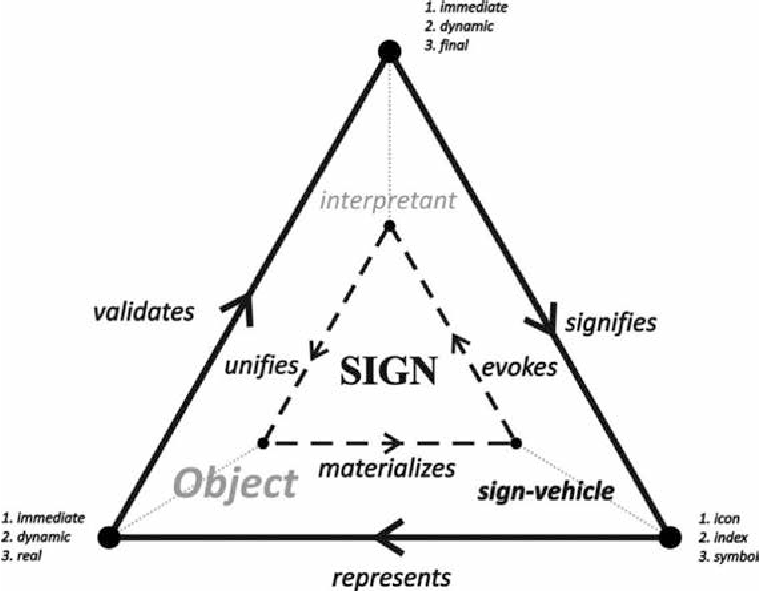
For this reason, effective analysis must always consider both the data itself and the interpretive context around it. Numbers influence decisions, but so do the mental models and assumptions through which those numbers are understood. Our approach therefore combines analytical reasoning with careful attention to interpretation, communication, and meaning.
Ultimately, pragmatic inquiry treats knowledge as iterative. Hypotheses lead to experiments, experiments generate feedback, and feedback refines understanding. Decision making becomes less about discovering permanent truths and more about improving our models of reality over time.
Peirc'’s philosophical position is often described as objective idealism, a view that attempts to reconcile the apparent divide between mind and matter. In contrast to strict materialism, which treats reality as fundamentally physical, Peirce argued that the universe is permeated by mind-like qualities—patterns, laws, and tendencies that make reasoning and meaning possible. However, this does not mean reality is merely subjective or constructed by individual observers. Rather, Peirce proposed that ideas, regularities, and forms exist objectively in the world and gradually become embodied in physical processes. Matter itself can be thought of as “mind that has become habitual.” In other words, the stable patterns we observe in nature—scientific laws, causal relationships, recurring structures—are the result of habits formed within the universe over time.
This perspective aligns closely with Peirce's pragmatic theory of inquiry. If the universe contains real patterns that can be discovered, then reasoning is not simply a human invention but part of the broader structure of reality itself. Our concepts and models are attempts to approximate those patterns. Scientific inquiry, therefore, is a long-run communal process in which hypotheses are generated, tested, and refined through observation and experience. Individual interpretations may be flawed, but through collective inquiry and iterative testing, communities of investigators gradually converge toward more reliable understandings of the patterns embedded in reality. Objective idealism thus provides a philosophical grounding for pragmatic science: the world contains real structures that invite interpretation, and human reasoning—though imperfect—is capable of progressively aligning itself with those structures through disciplined inquiry.
Transactionalism, Metacognition, & Fuzzy Pragmatics Inference
Inspiration: John Dewey
John Dewey extended the pragmatic tradition by emphasizing the transactional relationship between humans and their environments. In Dewey’s view, knowledge does not arise purely from observation nor purely from internal reasoning. Instead, it emerges from interaction between people and the situations in which they act.
This perspective has important implications for how organizations learn. Rather than treating knowledge as something transferred from experts to practitioners, Dewey argued that understanding develops through experience, reflection, and adaptation. Learning occurs when individuals actively engage with problems and refine their thinking through practice.
A key element of this process is metacognition, the ability to reflect on one's own thinking. Effective decision makers do not only ask “What is happening?” but also “How am I interpreting what is happening?” By examining the assumptions, models, and reasoning processes behind our conclusions, we become better able to adapt when conditions change.
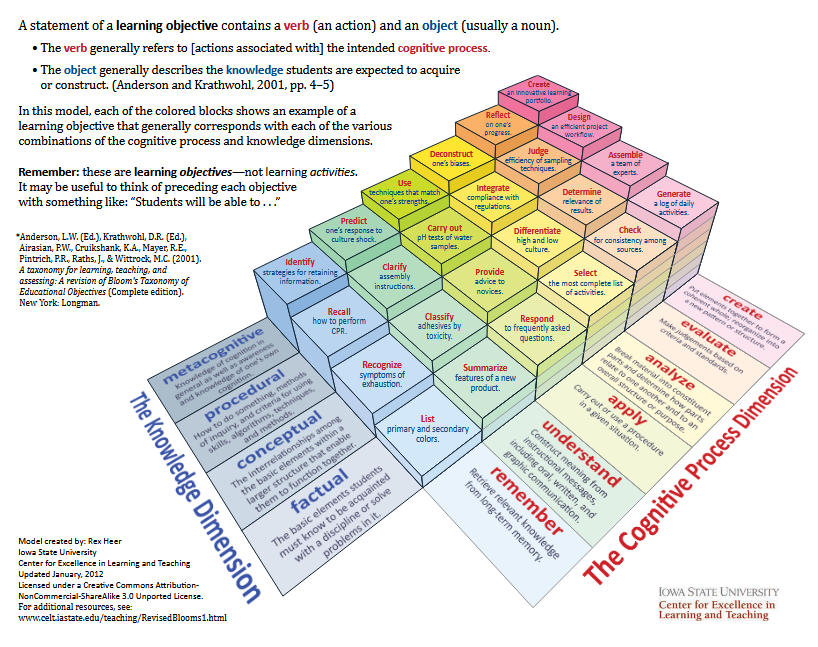
This is closely related to modern interpretations of Bloom’s Taxonomy, particularly the revised framework by Anderson and Krathwohl. In this model, learning progresses from remembering and understanding toward applying, analyzing, evaluating, and ultimately creating. Higher levels of thinking require not only knowledge but awareness of how knowledge is constructed and applied.
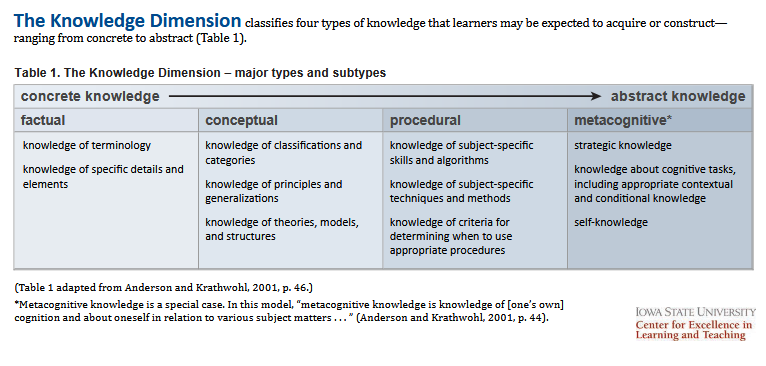
Another important element in our approach is the recognition that many real-world concepts exist on continuums rather than in binary categories. Traditional logic often treats statements as either true or false, correct or incorrect. However, in complex environments, most phenomena are better represented through degrees of uncertainty or membership.
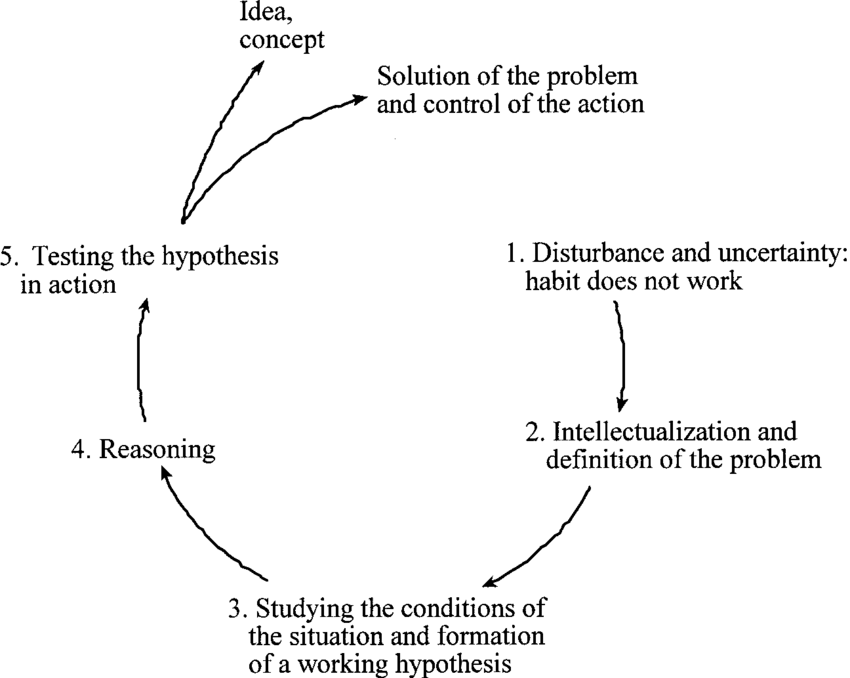
Dewey’s idea of transactionalism reframes the relationship between humans and the world. Rather than thinking of people as observers who stand outside reality and analyze it objectively, Dewey argued that we are always participants within the situations we attempt to understand. Knowledge does not arise from detached observation alone; it emerges from interaction. A person acts within an environment, the environment responds, and understanding develops through that continuous exchange. In this view, thinking is not separate from doing. Inquiry is an activity that unfolds through experimentation, reflection, and adjustment. Dewey described learning as a cycle in which experience generates questions, questions lead to action or investigation, and reflection transforms the results of that action into new knowledge.
This transactional perspective has profound implications for decision-making and organizational life. In practical terms, it means that managers, analysts, and designers are not neutral observers of systems—they are actors inside them. The moment we intervene in a process, collect data, ask questions, or frame a problem, we change the system itself. This is why Dewey emphasized inquiry as an iterative process rather than a purely deductive one. Organizations learn not by discovering a single correct theory of their operations, but by continually testing interpretations of reality through practice. Strategy, therefore, becomes less about predicting the future with certainty and more about intelligently experimenting within a changing environment.
When we combine Dewey’s transactional worldview with modern ideas of fuzzy reasoning and imperfect knowledge, the implications become even clearer. Human beings never interact with “reality” directly; we interact with interpretations of reality constructed through language, models, and abstractions. These abstractions are necessarily incomplete. Concepts such as “customer value,” “risk,” “efficiency,” or even “success” do not have sharp boundaries. They exist on continuums shaped by context, culture, and individual perspective. In the language of fuzzy logic, most categories in human reasoning have degrees of membership rather than binary definitions.
In such a world, transactional learning becomes essential because our interpretations are always provisional. Every model we build—financial, operational, or conceptual—is an approximation of a complex reality that cannot be fully captured. Decisions therefore rely on navigating ambiguity rather than eliminating it. Through action and feedback, organizations gradually refine their abstractions. What begins as a rough hypothesis becomes more useful as it is tested against experience, revised, and reinterpreted by participants within the system.
From this perspective, knowledge is neither purely subjective nor perfectly objective. Instead, it emerges from the ongoing transaction between human interpretation and the constraints of the real world. Our subjective frameworks shape how we understand systems, but reality pushes back through consequences. When a decision fails, reality corrects the abstraction that produced it. Over time, this iterative interaction produces more robust understanding. Transactional inquiry, especially when combined with tools for reasoning under uncertainty—such as probabilistic models, Bayesian inference, or fuzzy logic—allows decision-makers to work productively within the limits of human cognition while still learning from the objective structure of the world.
§02 /
SYSTEMS
For those who want to understand how we think.

Systems Thinking & Systems Dynamics
Inspiration: Jay Forrester
Many organizational challenges arise not from isolated problems but from interconnected systems of cause and effect. Systems thinking provides a framework for understanding these relationships by examining how structures, feedback loops, and time delays influence behavior.
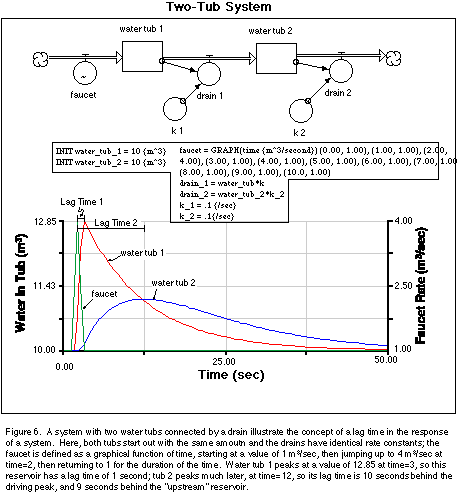
Jay Forrester, founder of system dynamics at MIT, introduced mathematical methods for modeling complex systems using feedback loops and differential equations. These models represent how variables change over time through relationships of accumulation, flow, and feedback.
While the underlying mathematics often involves nonlinear differential equations, system dynamics makes these relationships accessible through visual tools such as causal loop diagrams (CLDs) and stock-and-flow models. These tools allow practitioners to reason about complex feedback structures without requiring advanced mathematical training.
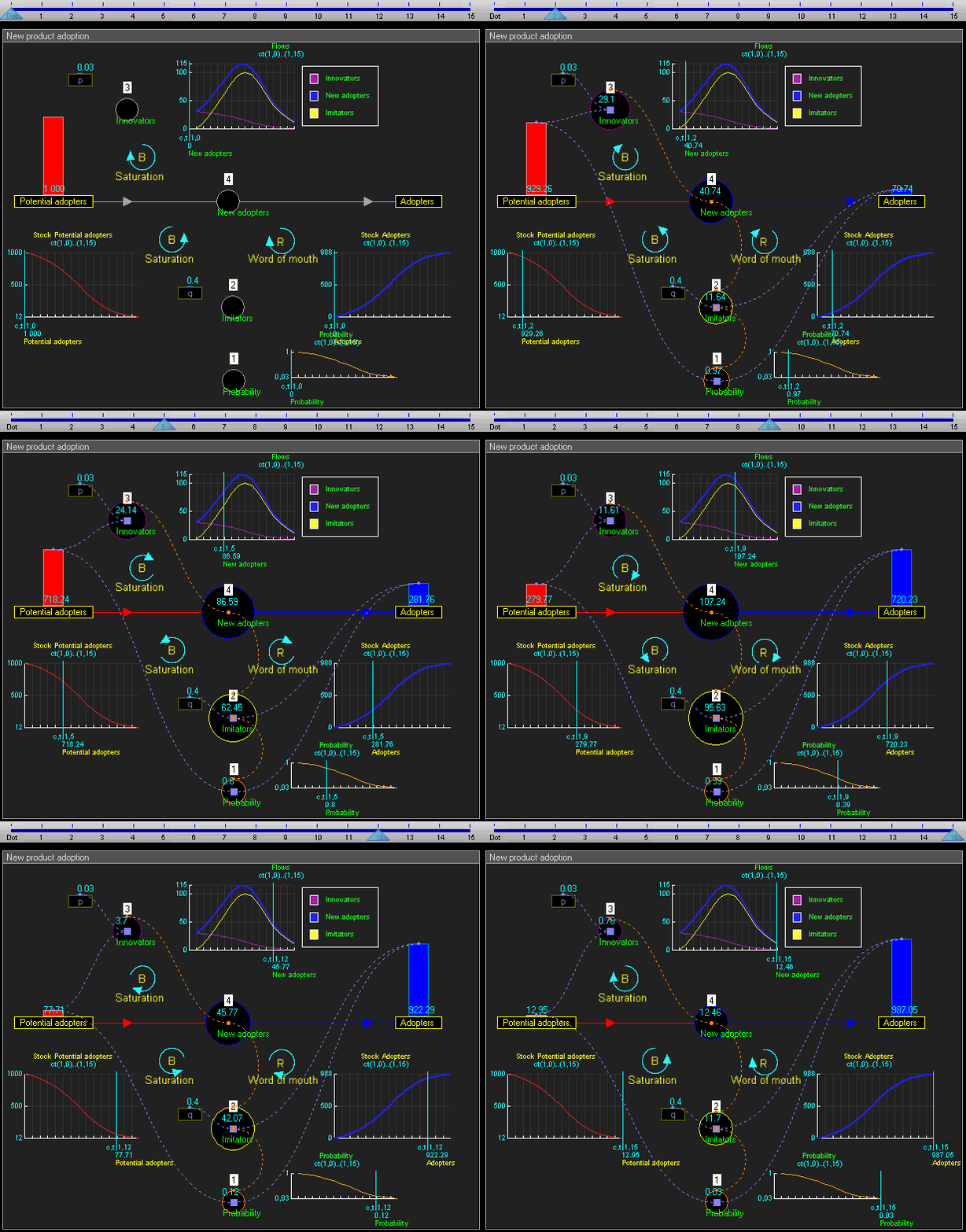
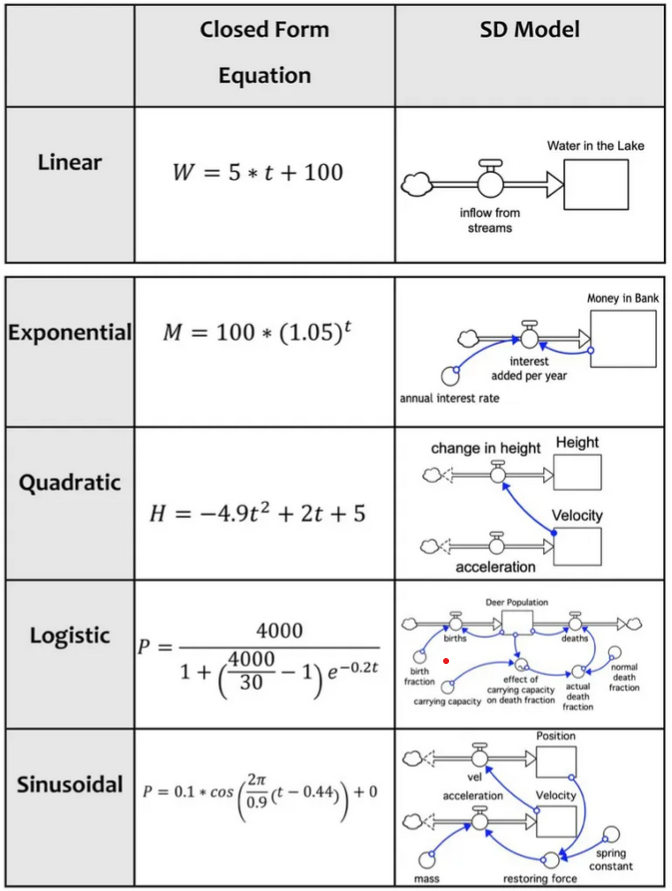
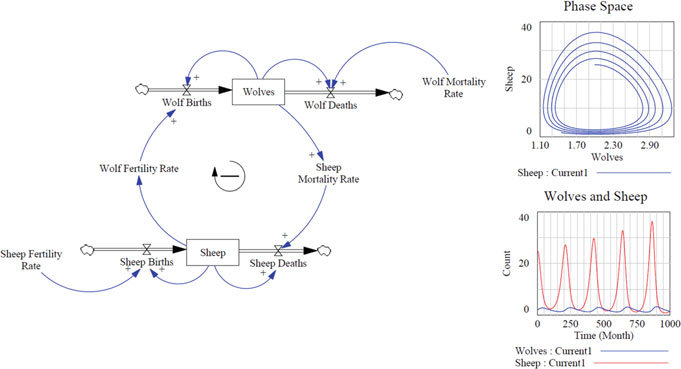
One classic example is the predator–prey model, which demonstrates how populations can oscillate due to feedback relationships between growth and depletion. Similar dynamics appear in business environments: inventory cycles, hiring and layoffs, market competition, and technological adoption frequently display comparable patterns.
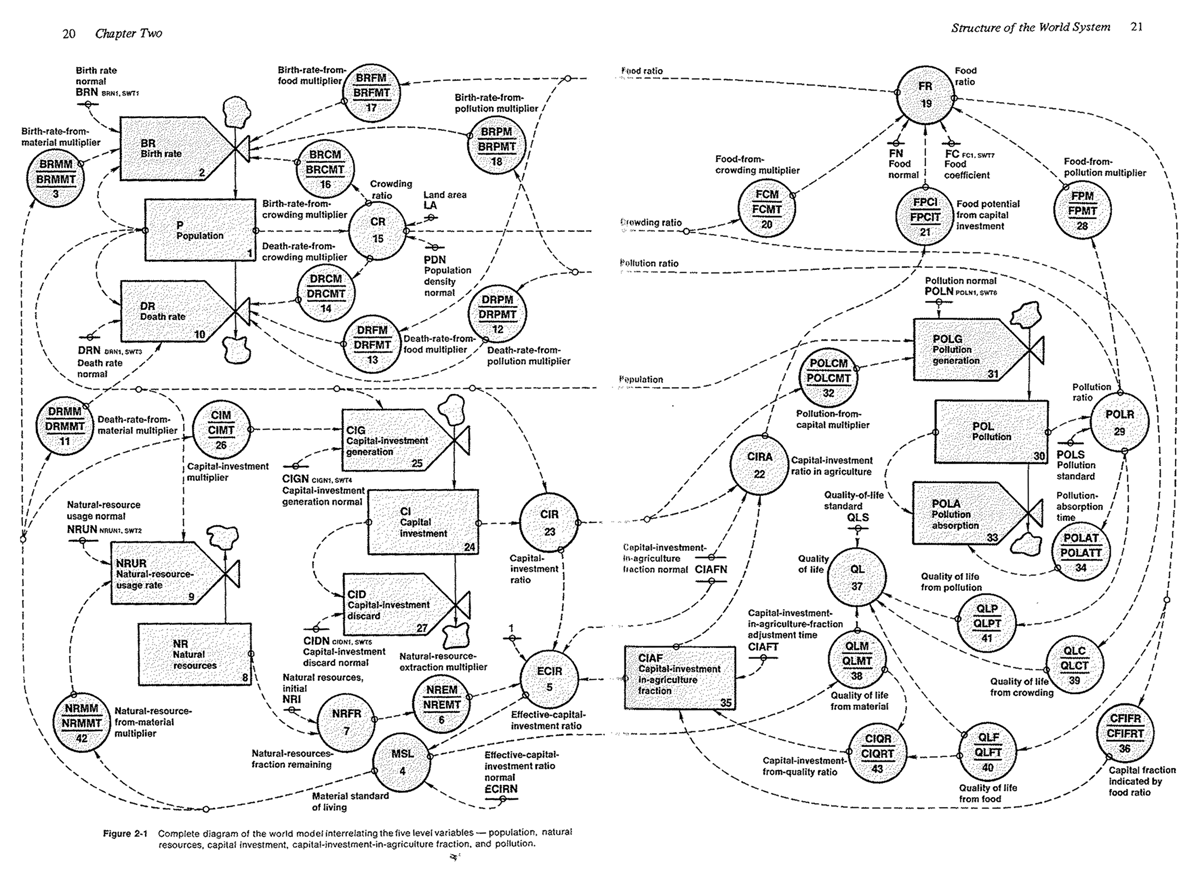
Forrester later applied these ideas to large-scale global modeling through the World Dynamics model, which examined interactions between population, industrial output, resource depletion, and pollution. While controversial, these efforts demonstrated the potential for systems thinking to illuminate long-term policy consequences.
In the business world, John Sterman expanded these ideas through the field of Business Dynamics, showing how managerial decisions often create unintended consequences through delayed feedback loops. Many persistent organizational problems—boom-and-bust cycles, chronic shortages, declining service quality—can be traced to feedback structures rather than isolated mistakes.
Systems thinking therefore shifts attention away from individual events toward underlying structural relationships. By identifying feedback loops and leverage points, organizations can intervene more effectively and avoid repeating the same problems over time.
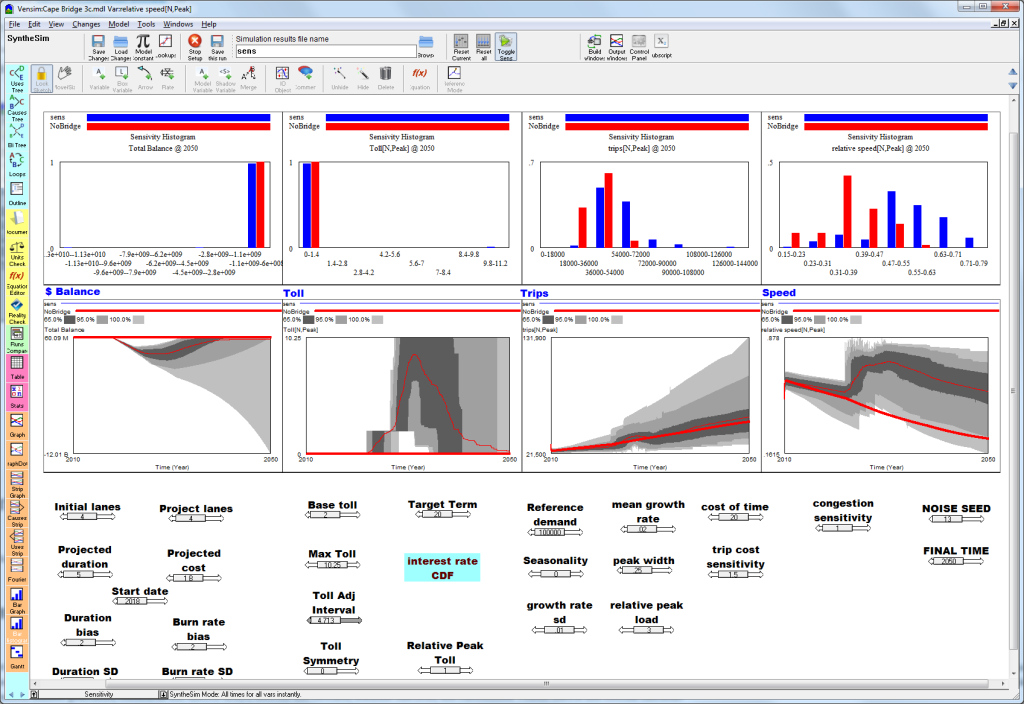
One of the most practical contributions of systems dynamics is the creation of management flight simulators. Borrowing the metaphor from aviation training, these simulators allow decision-makers to experiment with complex systems in a safe environment before acting in the real world. A systems dynamics model—built from stocks, flows, feedback loops, and nonlinear relationships—can be converted into an interactive simulation where managers adjust policies and observe the consequences over time. Instead of simply reading reports or static dashboards, participants can test pricing strategies, hiring policies, investment decisions, or regulatory changes and watch how the simulated system evolves.
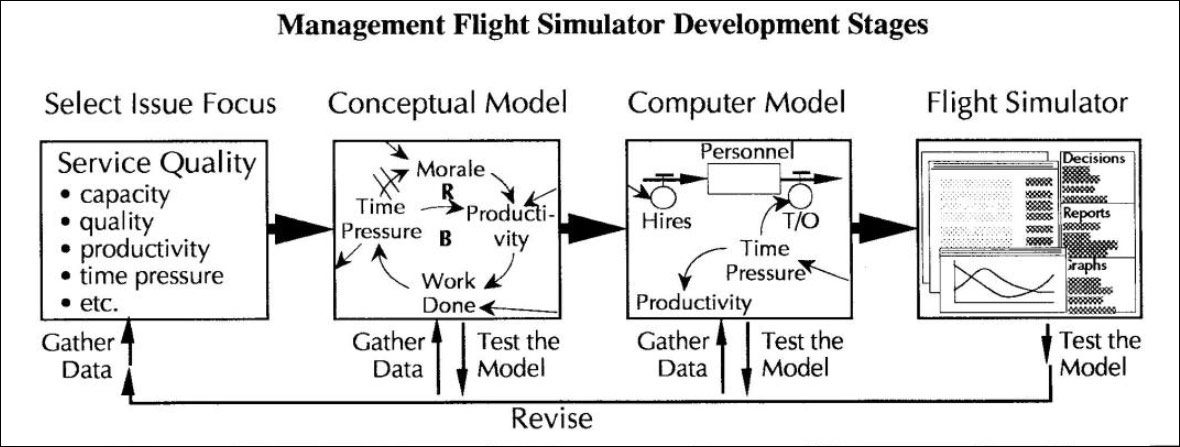
The value of these simulators lies in how they reveal the hidden structure of complex systems. Many managerial failures arise because cause and effect are separated by delays, nonlinearities, and feedback loops that are difficult to perceive in everyday operations. A policy that appears beneficial in the short term may create unintended consequences months or years later. Management flight simulators make these dynamics visible by allowing users to compress time and observe long-run system behavior. By experimenting with different policies, participants learn not only what works, but why it works. This experiential learning process helps managers internalize systems thinking, develop intuition about feedback behavior, and better anticipate the long-term consequences of their decisions in real organizational environments.
Emergence, Optimization, & Problem Framing
Inspiration: Russell Ackoff
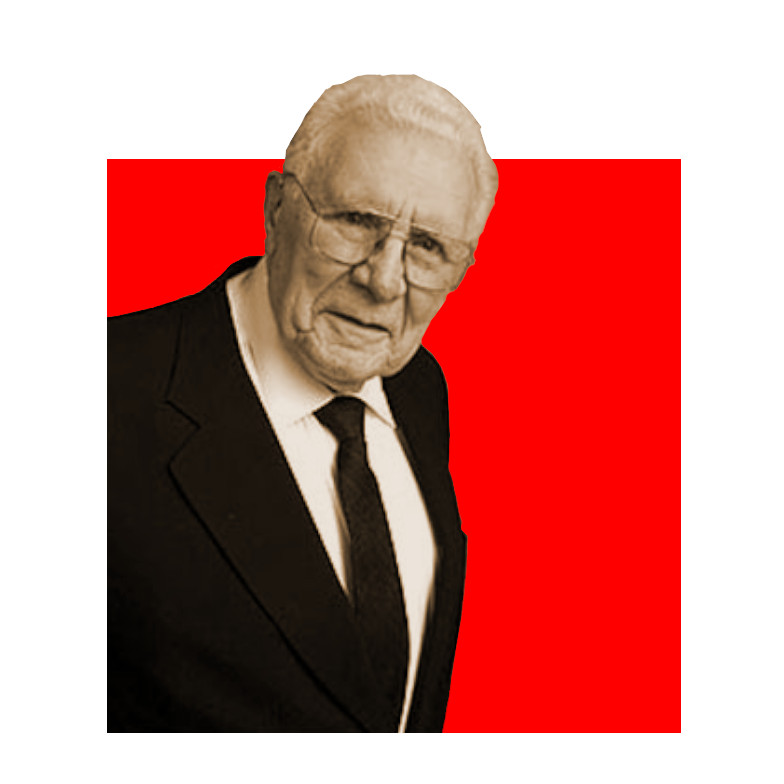
Russell Ackoff, one of the pioneers of operations research and systems thinking, argued that many organizations fail not because they lack solutions, but because they misunderstand the problems they are trying to solve.
Ackoff emphasized the concept of emergence, the idea that systems possess properties that cannot be understood by analyzing their components in isolation. A system’s behavior arises from interactions among its parts. As a result, improving individual components does not necessarily improve the system as a whole.
This insight led Ackoff to criticize traditional optimization methods that focus on maximizing performance within isolated subsystems. When departments optimize independently, the result can be a decline in overall system performance. What appears efficient locally may be harmful globally.
Instead, Ackoff advocated for systemic optimization, where decisions are evaluated based on their impact on the entire system. This requires shifting from reductionist thinking toward a holistic perspective that considers relationships, feedback, and long-term consequences.
Ackoff also distinguished between three approaches to addressing complex problems:
In his influential essay The Art and Science of Mess Management, Ackoff argued that most real-world challenges are not isolated problems but messes—complex systems of interrelated issues. Attempting to solve individual pieces without addressing the underlying system often leads to unintended consequences.
Effective leadership therefore requires not only analytical skill but the ability to frame problems correctly. The most valuable intervention is often redefining the situation in a way that reveals previously unseen opportunities for systemic improvement.
§03 /
DESIGN
For those who want to understand how we think.

Framing "Wicked Problems"
Inspiration: Horst Rittel

Horst Rittel introduced the concept of wicked problems to describe complex societal challenges that resist definitive solutions. Unlike technical problems with clear parameters, wicked problems involve multiple stakeholders, conflicting values, incomplete information, and evolving conditions.
Examples include urban planning, organizational transformation, climate policy, and large-scale technology systems. These problems cannot be fully solved through linear analysis because the problem definition itself evolves as stakeholders explore possible solutions.
Rittel identified several characteristics of wicked problems. They have no definitive formulation, no stopping rule, and no clear criteria for success. Each attempted solution changes the nature of the problem, and every intervention carries consequences that cannot be fully predicted in advance.
Design thinking emerged partly as a response to these challenges. Rather than attempting to identify a single optimal solution, designers focus on iterative exploration, developing prototypes and learning through experimentation.
Rittel also emphasized the importance of designerly thinking, where framing the problem is itself a creative act. The way we define a problem determines the solutions we consider possible. In complex environments, reframing the situation can be more powerful than optimizing existing solutions.
Double Loop Learning, Reflective Learning Systems, and Indeterminate Zones of Practice
Inspiration: Donald Schön
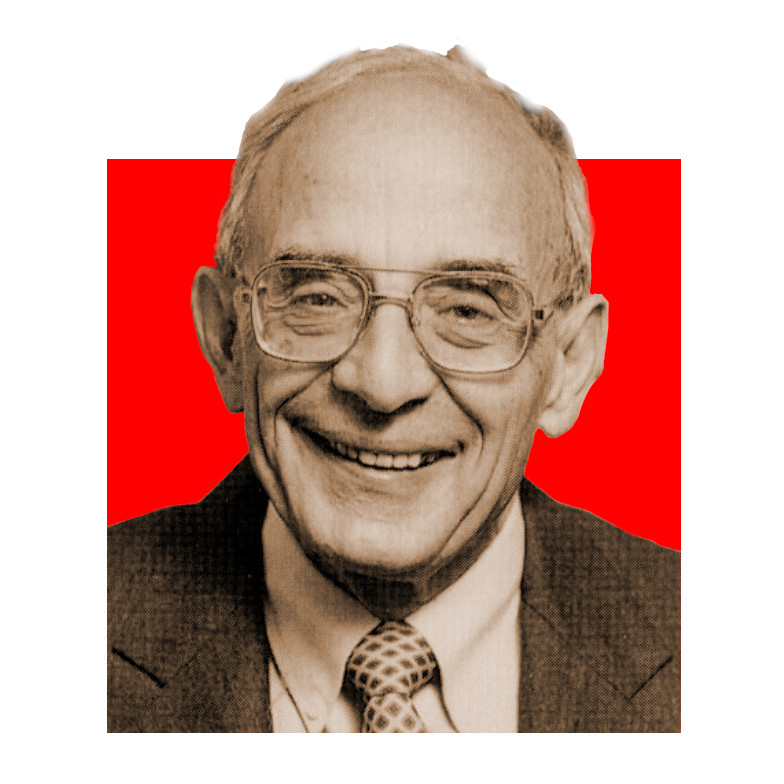
Donald Schön's work can be understood as a practical extension of Dewey's transactional philosophy into professional practice. Where Dewey described inquiry as an iterative process between humans and their environment, Schön explored how professionals actually think while acting within complex, uncertain situations. His central insight is that expertise is not simply the application of formal rules or theories. Instead, skilled practitioners engage in a form of applied metacognition—they actively reflect on their own thinking while they are working, adjusting both their actions and the assumptions behind those actions as a situation unfolds.
Schön described this process through the ideas of reflection-in-action and reflection-on-action. Reflection-in-action occurs when practitioners adjust their approach in real time while interacting with a system or problem. Reflection-on-action occurs afterward, when they step back to analyze what happened and refine their understanding. Together, these processes form what Chris Argyris and Schön later called double-loop learning. In single-loop learning, individuals adjust their actions to achieve existing goals more effectively. In double-loop learning, they question the underlying assumptions, rules, or problem framing that produced those goals in the first place.
This perspective is especially important in what Schön called the indeterminate zones of practice. These are situations where problems are poorly defined, objectives may conflict, and traditional analytical tools provide incomplete guidance. Most real-world organizational challenges fall into this category. In these contexts, professional judgment develops not through rigid adherence to models, but through continuous interaction with the system itself. Practitioners experiment, observe outcomes, reinterpret the situation, and adapt their mental models accordingly.
Seen through the lens of Deweyan transactionalism, Schön's work emphasizes that knowledge in practice emerges through engagement with real situations rather than purely abstract reasoning. Professionals are not simply applying knowledge to a problem—they are co-creating understanding with the environment through iterative reflection. The most effective organizations therefore cultivate reflective learning systems, where individuals are encouraged to question assumptions, examine their reasoning, and continuously refine their understanding of the complex systems in which they operate.
Human Centered Design
Inspiration: IDEO

Human-centered design focuses on understanding the needs, motivations, and experiences of the people affected by a system. Rather than beginning with technology or process constraints, this approach begins with empathy for the individuals interacting with the system.
Organizations such as IDEO have popularized this approach through design practices that emphasize observation, rapid prototyping, and iterative feedback. Designers seek to understand not only what people say they need, but how they actually behave within real environments.
Human-centered design recognizes that systems ultimately exist to serve human purposes. Even the most sophisticated analytical model will fail if it does not account for human motivations, emotions, and social dynamics.
By integrating qualitative insight with quantitative analysis, human-centered design helps ensure that solutions remain grounded in the lived experiences of the people they are intended to support.
Grounded Theory Research & Emotion Studies
Inspiration: Brene Brown Education & Research Group

Grounded theory is a qualitative research methodology developed to generate theoretical insights directly from empirical observations rather than imposing predefined frameworks. Researchers collect data through interviews, observations, and documents, then iteratively analyze patterns that emerge from the data itself.
This approach aligns closely with pragmatic inquiry. Instead of beginning with rigid theoretical assumptions, grounded theory allows concepts to emerge inductively from real experiences.
Research on emotion and vulnerability—popularized in part by Brené Brown’s work—has highlighted the importance of psychological factors in organizational life. Trust, fear, belonging, and courage influence decision making in ways that purely rational models often overlook.
Understanding emotional dynamics is particularly important in environments involving collaboration, leadership, and change management. Organizations that cultivate psychological safety create conditions where individuals are more willing to share ideas, question assumptions, and experiment with new approaches.
In this way, emotional insight becomes not a distraction from analytical rigor, but a critical component of understanding how complex systems actually function.
§04 /
PERSONAL PHILOSOPHY
For those who want to understand how we think.

Continuum of Fuzzy Axoimatic & Constructivist Pragmatics in Decisions & Transactionalist Humanistic Objective Idealism
Andy Hillier
Continuum of Fuzzy Axoimatic & Constructivist Pragmatics in Decisions
Firstly, disambiguation of the pragmatic and semantic meaning of the subject.
Decisions
The definition of a decision is well debated. There are views that a decision in an answer to a question. There are views that a decision is a subjective & cognitive intent towards action. A decision might be referred to as the emergent cognitive result of an antecedant evaluation of an analysis of past observations. 'Making' a decision refers then not to the intent or emergent result or answer, but the subsequent action taken or not taken. There is a concept known as 'flow state' in design, especially those involving eliciting tacit knowledge, that points to a way of decision-making not based on evaluation of prior observations, but as an active construction & applied intuitive reflection of experiences that leads to the outcome. In the tradition of Pierce, Dewey, Lewin, and many others not barred (especially in the field of modern education), there is a concept of ecological transactionalism in education that points to learning through intellection of our experiences in a subjective reflective process. This reflection might be concurrent to a concrete fact, like the observed state of an origami-in-practice, where through the active manipulation of it we build experience and myopic intuition through interplay between actions and desired form. The reflection alternatively may not be tied in space or time to experience and refer to a prior experience or action.
Pragmatics
"Pragmatics" reductively is an evaluative process of the context of a set of semantics. Some popular analogies are metaphorical or cultural. In the metaphorical example, the phrase "kindly, lend me your ear" may be semantically interpreted out of context as letting someone borrow our ears. But pragmatics tell us that the real intent is to listen closely. A cultural example I like is in the conversation, "please pass me the salt", to which another interpreter replies "the salt is over there". In this conversation, "the salt is over there" may be semantically interpreted out of context as a reference to the location of the salt, but pragmatics tell us that the real intent is to communicate that one should look how to solve a problem on their own before asking. Pragmatics reflect on the intent of semantics from an observer's subjective ideas of reality, not an objective truth about the meaning of the semantics in the larger world. Looking at pragmatics implies an evaluative process, not a semantic one where we apply logic, knowledge, and a syntax to communicate a definition. Much meaning is antecedant and meta to semantic interpretation.
The "Fuzzy" of Axiomatic and Constructivist Interpretation
There are the archaic metaphysical (antecedent to physics, i.e., to reality) views of being and becoming. Parmenides asserted reality is an unchaging state (being), pointing to change as illusory. Conversely, Heraclitus asserted reality is in constant change (becoming), and that state is illusory. This argument is still relevant to this day, we see it everywhere. One example, if you're coming from a software or systems engineering background, is object-oriented design and functional design. Another might be ontological conceptual modelling vs. process or activity-based modelling. In systems theory, we say a system is defined by both it's structure and behavior. Although debated, a system in the viewpoint of this writing is described as the emergent concept/idea that arises from the interaction, structure, and organization of some elements - notably, a concept, as the boundary of any system tends to be subjective and depends on the viewer (in a car, do we consider a human a part of the system? If so, is a car still a car without a human in it, or is it some other concept? Is a cake just the ingredients that make up a cake, or does it also include the discursive formation of a grandmother's love for her kids? Could the same cake represent to the child interpreter a symbol of growing up? In this way, every system and every abstraction is in some way subjective and localized). The way a system is defined does not have to be one of being or becoming, but is often instead one of emergence - a structure, but one that changes, and whose boundary and capabilities and interpretation is fuzzy and dependent on subjective experience and the subjective interpretation of it's boundary plus any additional human emotions, affects, and more added to it. Humans subjectively add meaning to abstractions, defining systems, but the definitions of those systems from an epistomelogical context involves a deduction and some averaging and intepretation of pragmatics applied. Does that make an individual's subjective interpretation of the system invalid, or is it a different abstraction altogether? Materialists and reductionists always seek to converge on truth, even when it's impossible to control somatic experience and cognition. Spirituality, I believe, is the overlapping of the human elements, emotions, and affects from our subjective abstraction of both being and becoming in the world into concepts of systems in a reality marked by transactionalism within an objective idealism. Humans add meaning within their subjective interpretations, and society seeks through modality and materialism to formalize aggregations of subjective interpretations into an epistemology, forming a pseudo-objective reality founded on a reduction or averaging of our humanity. Spirituality, then, is an attempt of humanity to leverage this pseudo-objective reality as a discursive formattion through which to learn of the more holistic experiences of humanity and bring us closer to a holistic view of the objective reality - to the extent possible and allowed by our cognition.
The Fuzzy, Nonlinear, and Continuous
Fuzzy (in the tradition of Zadeh) is a term commonly prescribed for methods in modern mathematics that mean element members of a set may only belong to said set with a certain degree of certainty. This way of thinking exists not just within mathematics, but even at the smallest scales of our understanding of physics, where subatomic particles themselves are uncertain and electron orbital states are just pockets of certainty about a likely state configuration or locality of a particle. In layman's terms, the implication of this means that isn't possible to ever perfectly apply classifers (criteria-based belonging to sets) to abstractions of information we create, because the abstractions themselves are based on imperfect cognition, somatic experience, flawed reasoning, and incompelte knowledge that even in the collective may not be overcome linguistically to accurately describe a state or experience in the world. In the same way one person may apply a cake to a classifier of 'sentimental', and another may not, the degree of certainty of belonging to some abstraction is inherently subjective, leading to analysis per the humanities. And here we see, that through methods like grounded theory research, it is still the patterns and systems that emerge from inductive analysis of one's own application of classifiers and sets and the saturation among many that we can start to develop abstract ideas like sentimentality with more context and a cleaner degree of confidence. Even the criteria that determine the classifier's application on an individual and group level are flawed - our records, and observations upon which statistics are based, also with some degree of uncertainty may not cleanly or perfectly belong to a set. The degree to which information elements may belong to a class or not, and through which the stochasity, volatility, and and inherent ambiguity of the world apply, means that abstractions are always fuzzy, and elements can be 'more or less' a part of a set.
Abduction, Inquiry, Inference, and the Implication of Pragmatics and Incomplete/Ignorant thought on Inference
Reasoning then, even within deduction and induction themselves, are in a way adbuctive and an art - as perfectly defined sets are fully imaginitive and don't hold any basis in objective reality. Belonging to a set, as we observe in systems, the world, meaning itself, ideas, and abstractions evolve with time and transactionally as more people influence and are influenced by them, causing them to evolve in time. And so, pragmatics and semantics, our abstractions, systems and the emergent concepts they imply, the strength of our own cognition and somatic experience - are affected by time, capability, learning, and will never eternally hold in their meaning or state. Defining perfect sets and using them for reasoning then will always both be based in and result in some degree of objective uncertainty and ignroance. In modern times, statistics are taken as truth, but the basis of the information on which statistics are derived are now more rarely understood or questioned in terms of their relationship with objective reality. In the traiditon of Charles Sanders Pierce, truly scientific reasoning about knowledge then is seen to be tied to the hypothesis and abductive reasoning about objective reality using subjective intepretation of cognition and somatic experience as a guidepost to infer patterns in the larger world - in a sense, we as humans are constantly performing statistics to navigate the world - but for us, the basis and meaning of the information whigh underlies the information elements driving the statistics are fuzzy and constantly perturbating and evolving in terms of pragmatics and semantics, per the transactionalist interpretation of Dewey and Bentley. Many statistical methods enshrine ignorance or uncertainty, but don't consider the derivative of it in updating for understanding of new information - such as the Bayesian prior, or Dempster-Shafer Belief Theory Belief - how might the prior itself evolve over time as our intepretation of the objective reality also evolves over time, and why is it only accumualted or added to, without regard to our updated understanding, cognitive capability, somatic experience, and more? Surely, since so much of modern AI and machine learning is based on a statistical fundamental, does the lack of dynamism and true stochasity/fuzziness without the human to create the classifier, which is imperfect and fuzzy, mean it is truly incapable of modeling the human experience to an accurate degree? Is the true difference between human and machine perfect/clean vs fuzzy and pragmatically/semantically evolving abstractions/classifiers as applied to informational element belonging to sets? What does transactionalism and a machine's inability to embody true ignorance without human pragmatics imply about a machine's role in a transactionally evolving objective reality?
Does an axiomatic or constructivist evaluation lead to a better outcome?: A thesis on dynamic pragmatics evaluation to leverage both axiomatic and constructivist metaphysics in interpretation according to utility
My assertion is that taking a fully axiomatic or constructivist evaluation will only lead to increased ignorance - and that the 'systems' approach which focuses on abduction, evolution, and emergence of concept a holistic informational view is a better approach. That isn't to say that axiomatic or constructivist interpretation in itself is incorrect or lacks utility in developing tests or a deeper understanding of the pragmatics that influence the boundary and definition of a system, and may in fact be necessary to describe the grounding of individual subjective influence, uncertainty, and ignorance on the character of the emergence that defines the system. ###
§05 /
TEACHING
For those who want to understand how we think.

Teaching Philosophy Statement
Andy Hillier, Educator
My Educational Background
I grew up in a single-parent household, with my dad and brother, a culture of stoicism, and pragmatic lessons. As a young creative, I struggled to find belonging and safety for my thoughts and ideas. Regardless, I was able to develop resilience and excel, becoming a first-generation college student, and helping to secure a future for myself. I started at university at age 14, through the Akron Early College High School program. This program was the only way I was going to be able to afford college. It was impressed upon me at a young age how important education was going to be to my future, and I learned that society's generosity and empathy towards my situation deserves all the credit for any achievements I find, even today. I want to be a safe space for developing students. College is where I developed my personal philosophy, and that philosophy is one of gratitude, humility, and understanding that I will always be learning, from start to end of life. Later I would switch careers from geology and the civil engineering industry to accounting, management, and eventually design thinking and systems engineering. One theme that has tied together all my choices for study has been the interdisciplinary and interconnected nature of the themes in each, and that is something I bring into all my teaching and learning.
Below are my guiding principles for teaching:
- Curiosity cannot be lectured into students-it must be facilitated.
- Important learning occurs when students find ownership over their own learning.
- Every student brings unique strengths that deserve recognition and development.
- Failure is fundamental to learning-embrace it, normalize it, learn from it.
- Bridge the known to the unknown through relatable experiences and stories.
- Psychological safety emerges through ethical contracts and consistent care, not techniques or methods.
- Assessment should involve reflection and creativity, as well as what students can understand, demonstrate, and deploy - not just recall.
- Individual growth deserves as much recognition as absolute performance.
- Human, Leadership, and Collaboration skills are as essential as technical competencies.
- Students must understand "why" not just "how".
Nurturing Human-Centered Technical Excellence: Building Bridges Between Learning, Growth, and Professional Purpose
My teaching philosophy is rooted in the profound belief that every student enters the classroom with inherent worth, unique experiences, and untapped potential. That said, I confess, I've learned that students often possess far more intuition and wisdom about systems than we give them credit for. I've discovered that effective teaching means nurturing individual growth and intuition.
As an educator and consultant with experience spanning lecturing and curriculum development for undergraduate and graduate MIS coursework at the University of Akron (ISM 315 - Application Development for Business Processes & ISM 427 - Systems Integration), through tutoring and curriculum development for undergraduate and graduate accounting and analytics coursework, and through professional education and over a decade bridging academia and industry through roles including Lead Education Consultant at FICO's Integrated Learning Organization and delivering workshops at EY and Burns & McDonnell, I understand how transformative learning occurs when we honor students' individual journeys while preparing them for meaningful professional impact. My education in Business, Systems Engineering, Leadership, and Human Centered Design Thinking has greatly impacted my worldview and pedagogy. I want to foster an inclusive learning environment that recognizes diverse backgrounds and aspirations of students.
Creating Inclusive Spaces Where Curiosity Flourishes
You cannot lecture curiosity into a student any more than you can water a plant by shouting at it about photosynthesis. Effective pedagogy recognizes that wonder must be cultivated through nurturing environments where exploration and discovery are valued and supported. Drawing from systems thinking, double loop learning, human-centered design, and cognitive learning theory (a la' Anderson and Krathwohl's 2001 revised Bloom's Taxonomy), I design learning experiences that meet students where they are while scaffolding their progression toward advanced technical competencies. I've learned, sometimes painfully, that where students "are" is often far more sophisticated than my assumptions suggest. One time after learning about creativity scars, courage, and that courage requires one to be vulnerable from one of my favorite authors (Brené Brown), I thought up a great lesson. The task was simple: draw a fish with legs. And it is always surprising the resistance or fear you get, lack of participation, and odd amount of vulnerability there is in such a small ask. It's very informative.
I implement the 5e learning model with intentional focus on student engagement, often beginning with empathy and compelling scenarios (such as using the Cleveland Clinic's "The Human Connection To Patient Care" video) to help students imagine how to connect technical solutions to real human needs. This helps students understand how technology serves broader social purpose. This approach acknowledges that meaningful learning occurs when we build conceptual bridges between students' existing knowledge and new technical concepts.
The Art of Bridge-Building Through Story
When introducing complex programming principles such as interface-based design, I've discovered that abstract concepts become memorable through the art of storytelling. Rather than diving into technical jargon about implied functions, decoupling and modularity, I begin with a simple question: "Imagine if every electrical device in your home needed to be hardwired directly into your walls."
The story unfolds as students view absurd images of things that shouldn't be wired into your wall. The absurdity of their coffee maker permanently wired into the kitchen wall, their phone charger extending through conduit from some central electrical panel. What if it breaks? The laughter that follows isn't just amusement; it's recognition. Then another example comes: "What if your car's trailer hitch was welded permanently to a trailer?" Now they're seeing the problem through multiple lenses, including the frustration of towing an empty trailer to the grocery store.
This narrative approach transforms the abstract principle of interface-based design into a lived understanding. The three-prong outlet becomes empathetic. A simple, standardized interface that allows any compatible device to connect and disconnect at will. The trailer hitch emerges as a champion of modularity, enabling option-of-use in system design. Through these relatable analogies, students don't just memorize technical concepts; they internalize the wisdom that good design creates flexibility, and flexibility creates opportunity and agility in the real world.
The storytelling continues as we bridge from physical interfaces to digital ones. "Now," I'll say, "imagine if your database was welded to your application like that trailer to your car." They get it immediately. The nightmare of being locked into one system forever, the elegance of creating clean interfaces that allow components to be swapped and upgraded. What began as a simple story about electrical outlets has become a foundational principle they'll carry throughout their careers.
Fostering Entrepreneurial Learning Through Authentic Problem-Solving
Like the best entrepreneurs who identify genuine market needs rather than solutions in search of problems, I design courses that emphasize project-based learning connecting classroom activities to real-world business challenges and community needs. Drawing from my extensive industry network and professional experience, I would ensure that student projects address authentic problems faced by organizations and communities.
In my approach to education, I would engage students in comprehensive, end-to-end projects that mirror professional development cycles. I've learned that the messiness of real-world development often provides the best learning opportunities, even when (especially when) things don't go according to plan. Rather than completing isolated exercises, students would identify genuine stakeholder needs for validation, develop empathy for user experiences, and create complete technological solutions. They would learn how to develop feasible systems concepts based on needs and scenarios, select options, and how to design and implement them with the full lifecycle in mind, including operations, upgrades, maintenance, and disposal.
For example, students in systems integration courses would establish their own cloud infrastructure, develop full-stack web applications with integrated databases and APIs, and deploy working solutions that demonstrate their capabilities to potential employers. When students walk away able to proudly declare "look what I made!" while showing a live, working website, REST API, and application to their families, they've crossed the threshold from academic exercise to professional capability.
Supporting Growth Through Compassionate Challenge
Technical education requires creating psychologically safe environments where students feel supported in taking intellectual risks and learning from failure. A lesson I learned after witnessing too many brilliant students paralyzed by perfectionism (especially HR students taking MIS classes, for some reason, even after doing better than the MIS students). Like a climbing instructor who ensures proper safety equipment while encouraging students to attempt challenging routes, I establish classroom communities built on explicit agreements about mutual respect, support, and growth-oriented feedback.
When students encounter inevitable frustration with debugging, I respond with genuine empathy: "Yes, this is frustrating! Sometimes code feels like it's actively conspiring against us." I then provide appropriate scaffolding and resources while normalizing the iterative nature of technical work. Professional developers routinely revise code dozens of times before achieving desired functionality. This isn't failure, it's the beautiful, messy process of crafting working solutions in a complex world.
Students who require additional support receive individualized attention and modified scaffolding rather than being left to struggle independently. I've learned that what looks like a struggling student often reveals itself to be a different kind of brilliant mind that simply processes information through a different pathway.
Preparing Adaptive Professionals for Technological Evolution
As artificial intelligence reshapes and impacts our field, I focus intensively on developing students' critical thinking, contextual reasoning, and ethical decision-making capabilities. Students learn to work effectively with AI tools while maintaining the analytical skills necessary to evaluate outputs, understand limitations, and make informed professional judgments.
Consider the nuanced difference between "could you pass the salt" and the response "the salt is over there." The first is clearly a request; the second might be helpful information or a gentle suggestion that the requester should look before asking. This semantic complexity and analysis of pragmatics, which humans navigate effortlessly through abductive reasoning, illustrates why students must develop deep contextual understanding to work effectively with AI systems that may miss such subtleties or catch ones that are unintended. I channel the pragmatic approach and wisdom of Charles Sanders Pierce and John Dewey in understanding Design and Philosophy in my approach to semantic design of AI-enabled processes and learning.
Assessment That Reflects Professional Reality
I measure success by what students can demonstrate and deploy in real-world contexts, recognizing that the most meaningful assessment often happens when students surprise themselves with their own capability and creativity. My assessment philosophy includes concurrent think-aloud interviews that explore not just what students can accomplish, but how they think critically about their work and envision future applications. In programming classes, just providing a working solution may not pass - how do you integrate empathy, context, your prior experience, and future goals? Creativity and abstract thinking are at the highest levels of cognition and implicitly point to deep analysis and evaluation. I confess that students often teach me as much as I teach them during these conversations. I hope it stays that way, because I still love to learn too.
Vision for the Future
I am excited to contribute to a mission of providing accessible, excellent education that serves students and communities. Students would leave my courses equipped not only with current technical competencies but with confidence in their abilities, resilience for navigating professional challenges, and understanding of how their work can contribute positively to organizations and communities.
Through this approach, I aim to prepare graduates with distinction as innovative, ethical, collaborative professionals who use technology as a force for positive change in our interconnected world.
§06 /
RESEARCH
For those who want to understand how we think.

Research Philosophy Statement
Andy Hillier, Systems Researcher
My research philosophy is grounded in the pragmatic tradition of Dewey and Pierce. Theory drives invention based on rigorous assessment of real-world impact and utility. I approach research in complex socio-technical systems with the understanding that mathematical models mean little if they cannot weather the storms of actual implementation and human variability, regardless of how elegant they are.
Research Worldview
My fascination with cybernetics and feedback systems stems from a fundamental belief that the most interesting research questions emerge at the intersection of human behavior and technical systems. In VUCA (volatile, uncertain, complex, ambiguous) contexts, binary solutions simply don't exist. Instead, we must grapple with what constitutes "good" or "bad" solutions and how society validates knowledge through collective sensemaking and epistemological processes.
This worldview drives my focus on counter-intuitive behaviors and process outcomes caused by myopic or localized interventions in value streams. Like a physician who understands that treating symptoms in isolation can create unintended consequences elsewhere in the body, I apply systems dynamics and systems thinking to strategic intervention & investment roadmapping, recognizing that cause and effect are often separated in both space and time within complex, evolving socio-technical systems.
Methodological Integration
My research methodology deliberately bridges quantitative analysis with human-centered design research, recognizing that each approach illuminates different aspects of complex systems behavior. While mathematical proof and convergence analysis provide theoretical rigor, I've learned through industry experience that quantitative measures can be gamed or lose practical utility when divorced from human context.
The stochastic and ever-changing nature of real-world systems means that even the most elegant mathematical model "will be wrong in a second". The critical question becomes how to factor, parameterize, tune, and adapt these models through empathetic understanding of the humans embedded within the system boundaries. This is why I employ generative toolkits, probes, and prototypes alongside stochastic dynamic programming and reinforcement learning approaches. When you truly empathize with people operating within complex systems, you can validate quantitative research and ensure it retains pragmatic value.
My approach to systems boundaries reflects this integration: humans aren't external users of systems. Instead, they are within the definition of the system boundary itself. This recognition fundamentally shapes how I design research studies, moving beyond traditional subject-object relationships toward participatory co-design approaches that honor stakeholder expertise while maintaining analytical rigor.
Adaptive Research Design
Research adaptability means more than flexibility. It requires actively testing your research through workarounds, systematic challenges, and dialectical probing (a la' Hegel). I approach each research question like a skilled debater who argues both sides, seeking not to defend predetermined conclusions but to discover robust insights that survive sustained intellectual assault.
This philosophy extends to interdisciplinary collaboration across systems engineering, operations research, control engineering, design, education, and human factors. Rather than viewing disciplinary boundaries as constraints, I explicitly seek overlaps and conflicts between methodological approaches, designing synthetic methods that leverage the strengths of each tradition while acknowledging their limitations. When conflicts arise between quantitative optimization results and qualitative human insights, these tensions often point toward the most fertile research opportunities.
Research Impact
I measure research success through multiple lenses that extend far beyond traditional academic metrics. True impact manifests through adoption rates, industry partnerships, and the willingness of organizations to invest their own resources in scaling research-derived solutions. My decade of industry experience provides rapid validation mechanisms-I can quickly assess whether research insights translate into measurable organizational value or represent purely academic exercises.
However, impact also includes preparing students with practical methodologies, thinking frameworks, and skills that enhance their professional capabilities. Research should inform teaching practice, creating cascading effects that extend research influence through each student who applies systems thinking principles in their eventual careers.
Community-Centered Research Practice
Effective research in complex socio-technical systems requires genuine humility and collaborative engagement with stakeholders. Rather than positioning myself as the expert studying subjects, I invite community members and practitioners into co-design processes, asking questions that honor their experiential knowledge while bringing systematic analytical frameworks to bear on challenges they've identified as significant.
This participatory approach extends to research communication through what I call "research storytelling"-using graphics, visuals, and narratives that translate complex analytical findings into moments and topics that connect with everyday people's experiences. Like the master teachers who can explain quantum physics through familiar analogies , effective researchers must bridge the gap between sophisticated analytical methods and practical understanding that enables adoption and implementation.
Ethical Research in Complex Systems
Working within complex socio-technical systems requires constant attention to unintended consequences and potential harm. My research ethics extend beyond traditional human subjects protections to consider broader systemic impacts: Which populations might be affected by optimization algorithms? How might interventions designed to solve specific problems create new forms of inequality or system brittleness? Where must I demonstrate greater humility about the limits of my understanding?
These ethical considerations shape both methodology selection and research dissemination strategies, ensuring that analytical insights are contextualized within broader social and organizational realities.
Vision for Research Contribution
My research aims to develop theoretical frameworks and practical methodologies that help organizations navigate the inherent tension between local optimization and system-wide performance. Through rigorous mathematical analysis informed by deep human understanding, I seek to create decision-support tools that acknowledge uncertainty while providing actionable guidance for strategic intervention in complex socio-technical systems.
I wish to contribute to building research capacity that serves both academic advancement and regional economic development needs. My industry network and practical experience would facilitate research partnerships that provide students with authentic research opportunities while generating insights that benefit organizations throughout society.
Like the master craftsperson who understands both the properties of individual materials and the dynamics of complete structures, I approach research with respect for both analytical precision and systemic complexity. Through this integrated approach, I aim to generate knowledge that not only advances academic understanding but also empowers practitioners to create more effective, equitable, and resilient socio-technical systems.